

Case · Saab · Autodefence
Keeping RBS 70 NGmission-readyfor decades
Introduction
01Advanced defence products are no longer judged on unit price. They are judged on what they cost to own and keep ready over decades — and that makes diagnostics a design-phase decision.
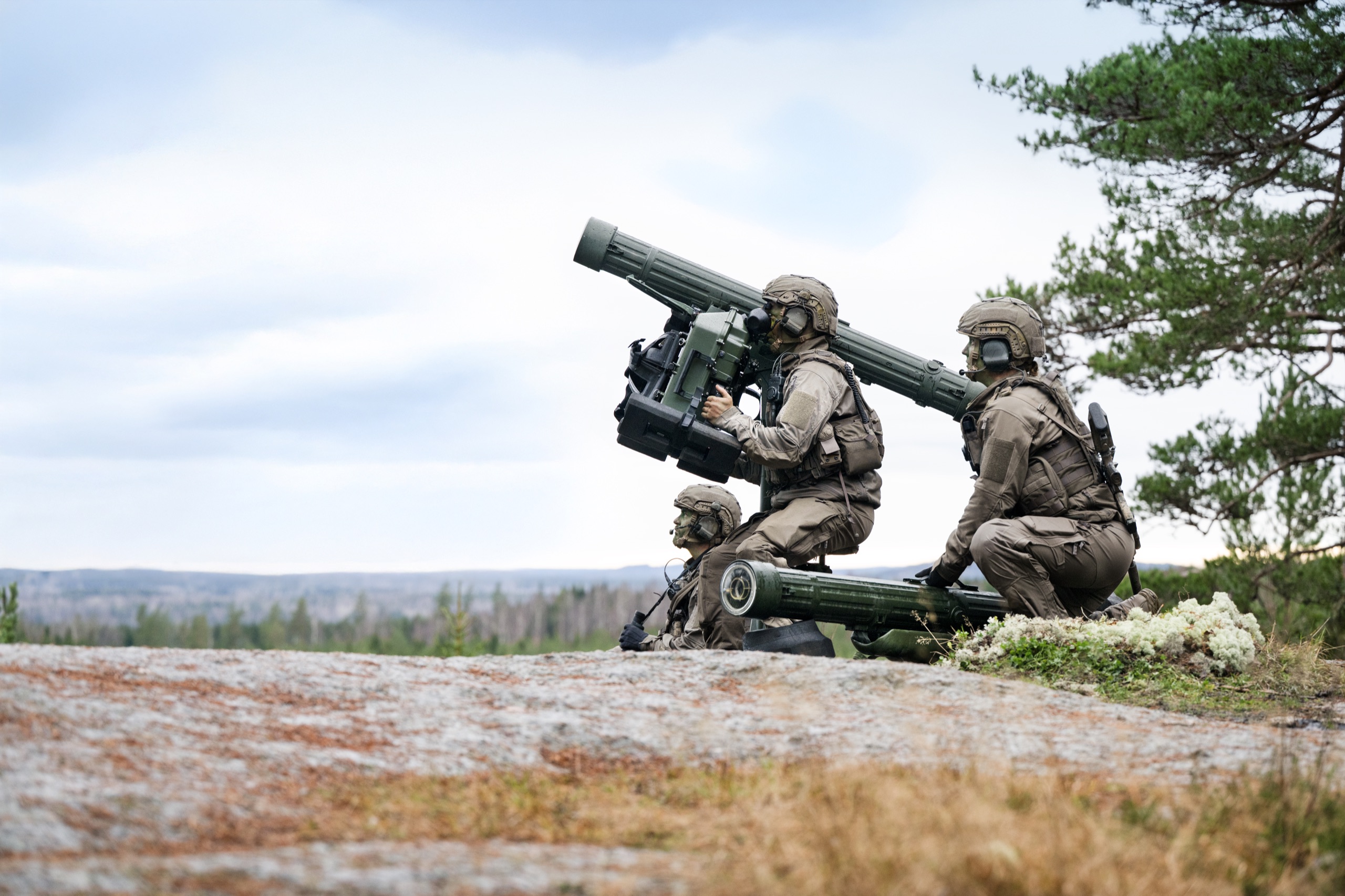
In 2011 Saab launched RBS 70 NG, the new generation of its combat-proven short-range air-defence system. The leap was as much digital as ballistic: the analogue sight became a networked digital one — thermal camera, night vision, video recording, built-in test sequences and calibration, with control units linked in a network. A more capable sight is also a more complex one to keep running in the field for thirty years and more.
Saab's insight was that the answer could not be bolted on afterwards. The maintenance concept had to be designed alongside the product itself, with diagnostics requirements brought in already at the design phase. Saab brought Diadrom in early — during the development of RBS 70 NG itself — and the two teams ran a joint pre-study that carried two decades of automotive diagnostics rigour into the defence and security context. Out of that work came OBELISK (now MAS), the PC-based off-board system that became, and remains, the way the RBS 70 NG sight is managed through its life.
We drew on Diadrom's knowledge very early in the development of RBS 70 NG, which was extremely valuable. Together we developed the concept into a finished product. OBELISK is a highly effective tool for managing the product across its entire lifecycle — and a key part of our ability to offer innovative solutions to our customers' challenges.
Impact
02Ready forthirty years
Total cost of ownership decides air-defence procurements. Designing diagnostics in from the concept phase is what makes condition-based maintenance — and the cost curve that follows from it — possible at all.
- A
30+ years
Service life the maintenance concept is designed for
- B
8
Networked control nodes managed from one off-board system
- C
9 km
Engagement range the system must stay ready to deliver
- D
18–30%
Maintenance-cost reduction documented for condition-based maintenanceIndustry benchmark
- E
30–50%
Reduction in unplanned downtime under condition-based maintenanceIndustry benchmark
A–C are programme facts. D and E are published industry benchmarks for the shift from reactive or calendar-based maintenance to condition-based maintenance (McKinsey; U.S. Department of Energy) — they describe the economics the design decision unlocks, not a measured Diadrom result.
Capabilities
03One system, the whole life cycle
OBELISK gave Saab a single, consistent way to manage the sight from production through every year of field service — without bespoke tooling for each task.
- 01Control and read sight status
- 02Read and update sight configuration and parameters
- 03Software download to the sight
- 04Trigger in-sight (built-in) test sequences
- 05Calibration and tests with external equipment
- 06Review engagement history, including graphs and video
The system
04Insidethe system
Networked architecture
- One off-board application addresses every control node on the sight
- Each node runs its own software and, where relevant, holds its own calibration data
In practice
- Read a per-node software inventory before deciding what an update actually has to touch
- Keep calibration data with the node that owns it, so a replaced unit carries its own truth
Control nodes
- GBTE
- MAC
- MMEE
- SCG
- SCO
- SMU
- T1
- VU
Connectivity and separation
- Node and sub-component links run over RS232 and IP
- The off-board system connects over Ethernet through a firewall
In practice
- Serial and IP transports behind one application interface, so the operator never handles the difference
- A firewall boundary between maintenance equipment and the sight network, by design rather than by policy
Transports
- RS232
- IP
- Ethernet
- Firewall-separated
Maintenance model
- Fault detection with remedy logging, so a fix is recorded against the fault it resolved
- Boot-mode and heartbeat monitoring across the node network
- Scheduled-inspection tracking, including periodic sight inspections
In practice
- Build condition-based maintenance on recorded evidence instead of a calendar
- Carry the same fault history from production into decades of field service
Supports
- Condition-based maintenance
- Remote support
- Periodic inspection
- Fault history
Diadrom roles on the programme
- Front-end
- Back-end
- Full-stack
- Embedded software
- Software test
- Requirements engineering
- Project management
Sites
- Gothenburg
- Karlskoga
Outcome
05Designed in,not retrofitted
OBELISK gave Saab a single, consistent way to manage the RBS 70 NG sight from production through every year of field service — reading status, resolving faults, downloading software and calibrating, without bespoke tooling for each task.
Because diagnostics were designed in rather than retrofitted, Saab and its customers can build new maintenance solutions on top — condition-based maintenance and remote services — that lower life-cycle cost, the metric their customers actually buy on. It is the same discipline, proven in automotive serial production, applied to a system that has to stay ready for decades.
Diagnostics is no longer an aftermarket detail — it is a design decision that determines what a system costs to keep ready for thirty years. RBS 70 NG showed how much value sits in getting that right from the start.
Further reading
06- DiadromAutodefence — vehicle-proven diagnostics in defence service since 2012→
- DiadromHow we work with diagnostics standards→
- DiadromChoose the responsibility you need→
Details drawn from Diadrom's published reference material on the RBS 70 NG / OBELISK programme. Industry benchmark figures attributed to McKinsey and the U.S. Department of Energy. Further information available to qualified parties under NDA.
Autodefence